AI Model Wars: Grok 4.5 vs GPT-5.6 vs Claude Explodes
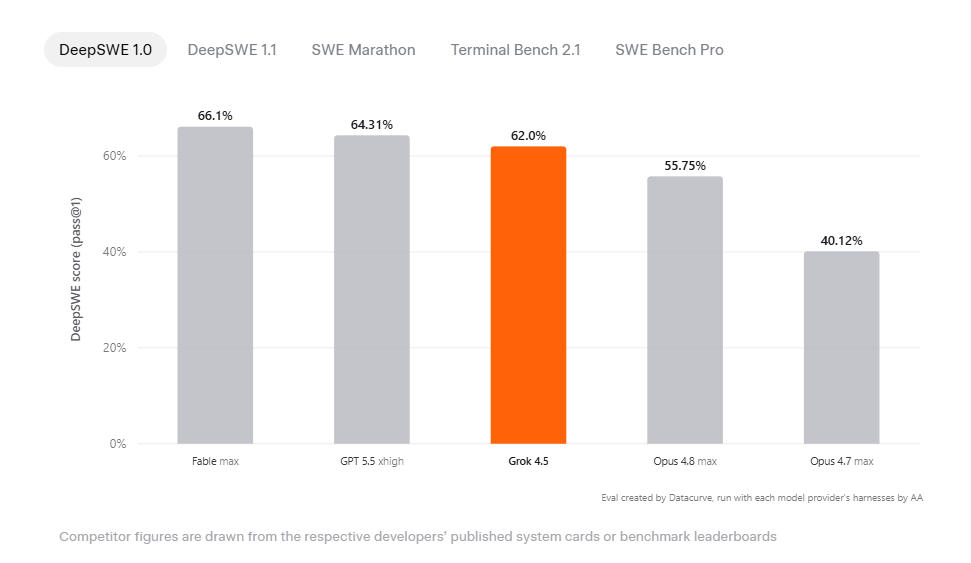
This week delivered the most explosive 72 hours in AI history. Launches, bold claims, ranking drama, and a fresh wave of bias accusations turned the frontier model race into full-blown spectacle. If you’re building with AI, choosing tools, or just watching the drama, buckle up, the landscape shifted overnight.
Grok 4.5 Drops: Musk’s Opus-Class Challenger
SpaceXAI (xAI) launched Grok 4.5 on July 8, 2026, a 1.5-trillion-parameter beast optimized for coding, agentic tasks, and real engineering work. Elon Musk called it “Opus-class” but faster, more token-efficient, and cheaper.
Key strengths highlighted:
- Excels in SWE benchmarks and real-world coding (e.g., 29% on SWE Marathon pass@1, competitive on Terminal Bench).
- Massive token efficiency (up to 4x fewer tokens than rivals on some tasks).
- Pricing: $2/M input, $6/M output, undercutting premium tiers significantly.
- Built into Grok Build for office tools like Excel, PowerPoint, and Word.
Musk positioned it as practically useful for Tesla/SpaceX engineers, not just benchmark theater.
The Controversy Hits Fast: Independent evaluations (e.g., Artificial Analysis) ranked Grok 4.5 4th overall, behind Fable 5, GPT-5.5, and Opus 4.8, sparking immediate debate. Musk’s #1 claims on select benchmarks clashed with broader leaderboards.
Add in the predictable political bias firestorm. Grok’s history of less-filtered responses (and past incidents involving controversial outputs) fueled viral criticism that it leans into Musk’s worldview. Defenders praised the reduced “woke” guardrails; critics called it risky. Classic Grok drama.
OpenAI Strikes Back: GPT-5.6 Family (Sol, Terra, Luna)
OpenAI didn’t wait. They dropped the GPT-5.6 trio, flagship Sol, balanced Terra, and efficient Luna, with major integrations.
Highlights:
- Sol leads on agentic workflows, coding agents, and design judgment. Strong on Agents’ Last Exam and Artificial Analysis indexes.
- Merged Codex capabilities deeper into ChatGPT; launched ChatGPT Work for professional knowledge tasks.
- Efficiency gains: Better performance per dollar, multi-agent “ultra” mode for complex jobs, and polished computer-use/design features.
OpenAI emphasized practical output quality, refined decks, documents, and end-to-end apps, while tightening safety.
Anthropic’s Move: Claude Cowork Goes Mobile
Anthropic expanded Claude Cowork (their agentic desktop tool for file management and autonomous tasks) to mobile and web. It’s positioned as a virtual coworker for non-coders and pros alike, handing off tedious work and returning polished results.
This fuels the ongoing rate limit wars: Users complain about OpenAI and Anthropic throttling heavy usage, pushing debates on accessibility and pricing as competition heats up.
User Reactions & Real Talk
X (and beyond) lit up with hot takes:
- Coders praising Grok 4.5’s speed and cost for real codebases: “Quietly lapping the field on actual spaghetti code.”
- Rankings debates: Many users’ personal stacks put Claude Fable 5 or GPT-5.6 Sol on top, with Grok strong for value.
- Bias arguments dominated early discourse, but practical testing threads focused on output quality and efficiency.
- Excitement around agentic capabilities across all players, the real winner may be whoever delivers reliable “do the whole job” agents first.
Benchmark Snapshot (simplified from independent sources like Artificial Analysis): Fable 5 and top GPT/Claude variants often edge raw intelligence indexes, but Grok shines on cost/performance Pareto frontier. GPT-5.6 emphasizes efficiency and design polish.
Bottom Line: Choose Your Fighter
This isn’t winner-take-all anymore, it’s a multi-model world:
- Need raw power + polish? → GPT-5.6 Sol / Claude.
- Value + speed for engineering? → Grok 4.5.
- Agentic workflow on your devices? → Claude Cowork expansions.
The chaos benefits users: faster innovation, better pricing, and more choice. Expect rapid iterations, the wars are just heating up.
What’s your current go-to model, and why? Drop your rankings and experiences below. The conversation (and benchmarks) never stop. 🚀
Stay tuned for hands-on tests and more updates. Sources include official announcements, Artificial Analysis, and community discussions.